

Unlock the World with Unlimited eSIM Data Plans
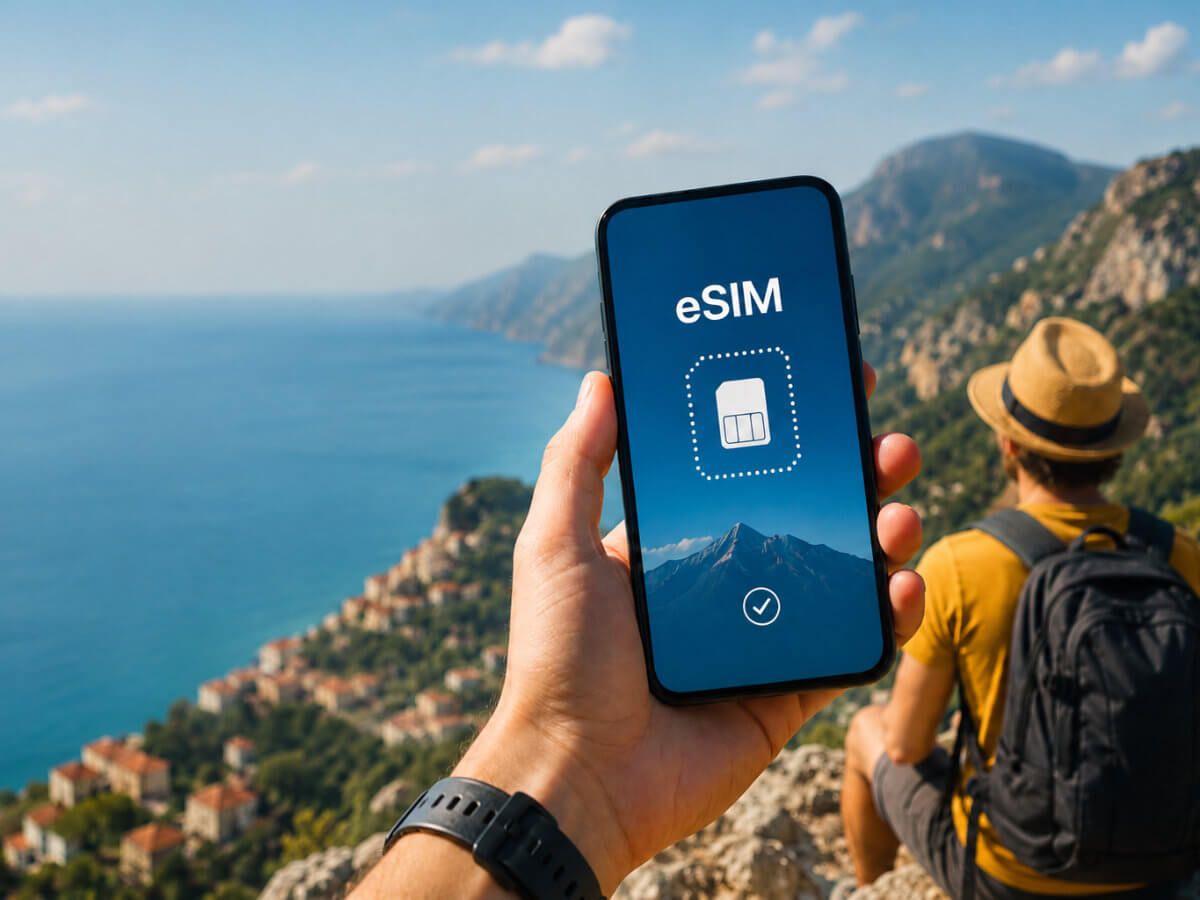
What if your mobile data never ran out, no matter where you traveled? An eSIM with unlimited data is a digital SIM embedded in your device that connects to local networks globally, bypassing physical cards and roaming caps. It works simply by activating a plan via a QR code or app, giving you immediate access to high-speed internet for streaming, work, or navigation. Unlimited data eSIMs eliminate data anxiety, as you never pause to top up or monitor usage.
Beyond Physical SIMs: How Unlimited Connectivity Is Shifting
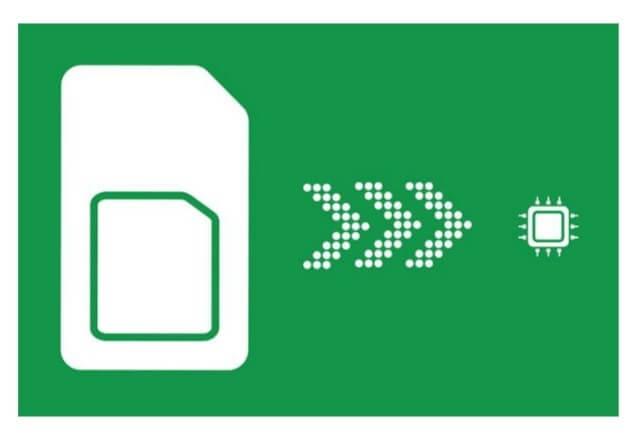
Beyond Physical SIMs transforms how you use esim unlimited data. Instead of swapping plastic cards, you activate a data plan with a QR scan or app download. This shift means your connectivity follows your account, not a tiny chip in your pocket. You can load an esim unlimited data plan for a trip, erase the profile after use, and keep your primary line untouched. No waiting for delivery, no losing a SIM card. The hardware vanishes, leaving only a seamless connection that you manage entirely from your phone’s settings. For travelers and remote workers, this is the core of Beyond Physical SIMs: unlimited data becomes a tool you toggle on demand, not a physical object you carry.
What Makes Digital-Only Plans Ideal for Heavy Users
For heavy users, digital-only plans sidestep the hassle of juggling multiple physical SIMs when burning through terabytes of data. You can instantly pause a plan from your phone’s settings if you’re nearing a throttle limit, then resume later without a store visit. True unlimited data flexibility means you can switch between carrier profiles mid-stream—torrenting on one network, streaming on another—directly from your device. No physical switching, no downtime, just continuous connectivity as you push boundaries.
Digital-only plans let heavy users skip hardware limits, pause or switch carriers instantly, and keep data flowing nonstop—all from a single device screen.
Key Differences Between Traditional Carrier Offers and Modern Alternatives
Traditional carrier offers lock users into rigid, multi-year contracts with a single physical SIM, often imposing throttled speeds after a data cap is hit. In contrast, modern eSIM unlimited data alternatives provide true unlimited connectivity without throttling, leveraging multi-network roaming to maintain consistent speeds. Users avoid long-term commitments and can switch between providers via a digital interface, eliminating the need for physical SIM swaps or store visits. This also removes roaming surcharges, as coverage is dynamically sourced from local networks.
- Contract vs. no-contract: traditional requires long-term lock-in, modern offers month-to-month flexibility.
- Data throttling: traditional caps speed after a limit, modern alternatives enforce no speed reduction.
- Network switching: traditional ties to one carrier; modern eSIMs automatically select the best local network.
Assessing Coverage and Speed Caps in All-You-Can-Use Packages
When evaluating eSIM unlimited data plans, your primary focus must be on assessing coverage and speed caps within all-you-can-use packages. A true “unlimited” label becomes meaningless if the provider’s network has weak coverage in your frequent locations, leading to throttled or nonexistent service. Scrutinize the carrier’s local roaming partners and check for a “fair use” policy that activates a hard speed cap after a specific data threshold, often reducing 5G/4G to unusable 2G or 128 kbps. Always confirm uncapped speeds on primary networks before committing, as many budget deals advertise unlimited data but silently enforce a 10–20GB full-speed limit. An all-you-can-use package is only valuable when coverage is robust and speed caps are explicitly stated or absent entirely.
Identifying Truly Unlimited Tiers vs. Throttled High-Volume Options
To identify truly unlimited eSIM tiers versus throttled high-volume options, first scrutinize the fine print for a “Fair Usage Policy” (FUP) that caps high-speed data after a set threshold. Compare the listed speed caps after that threshold: a genuinely unlimited plan maintains usable speeds (e.g., 5–10 Mbps), while throttled options often drop to 128 Kbps or less. Look for explicit language about “deprioritization” versus “hard throttle.” A plan labeled “unlimited” with a 50GB high-speed cap followed by 1 Mbps is a throttled high-volume tier, not truly unlimited. Verifying the post-cap speed guarantee is essential. Follow this sequence:
- Check the terms for any listed high-speed data cap, even if labeled “unlimited.”
- Identify the exact speed after the cap (e.g., 256 Kbps vs. 5 Mbps).
- Determine if the slowdown is a hard throttle or network deprioritization.

The Impact of Deprioritization on Streaming and Tethering
Deprioritization directly degrades streaming and tethering on “unlimited” eSIM plans once you exceed a soft cap. High-resolution video buffering becomes common, especially during peak congestion, as your data packets are queued behind priority users. Tethering suffers more acutely, as mobile hotspots amplify latency and packet loss, making real-time applications like video calls unstable. While a deprioritized connection can still handle background tasks, its inability to maintain consistent throughput makes it unsuitable for HD streaming or tethered work. This practical constraint often renders advertised “unlimited” speeds illusory for heavy tethering users, as deprioritized tethering throttles the actual throughput needed for multiple connected devices.
Top Destinations and Use Cases for Boundless Roaming
Boundless Roaming with eSIM unlimited data transforms global travel for digital nomads and frequent flyers. For example, hopping between Japan, South Korea, and Thailand stays seamless, letting you stream 4K video or join Zoom calls without hunting for local SIMs. A critical use case is a week-long business trip across the UK, France, and Germany, where you need constant hotspot access for a laptop while navigating trains. Remote workers in Bali or Portugal use this to back up cloud projects in real-time, avoiding throttled hotel Wi-Fi.
The true insight is shifting from country-by-country data plans to a single, one-click connection that works across entire continents.
Another practical scenario is a cruise to the Caribbean, using Boundless Roaming to share one unlimited plan across multiple devices via tethering, ensuring family entertainment aboard ship.
Frequent Travelers and Digital Nomads: The Largest Beneficiaries
For frequent travelers and digital nomads, seamless global connectivity is non-negotiable. An unlimited data eSIM eliminates the grind of sourcing local SIMs in every new country, allowing you to hop from a co-working space in Bali to a client call in Lisbon without disruption. You bypass airport kiosks and language barriers, maintaining high-bandwidth workflows—Zoom meetings, cloud uploads, and VPN access—on a single, China eSIM always-on plan. This directly solves the pain of unpredictable roaming bills and dropped signals, turning any café or airport lounge into a reliable office. The freedom to stay online instantly, anywhere, means you keep earning and exploring without technical friction.
Short-Term Rentals and Temporary Relocations Without Local Contracts
For travelers securing short-term rentals or embarking on temporary relocations, avoiding local contracts is a major advantage. Unlimited data eSIMs eliminate the need for binding monthly plans or credit checks, offering instant connectivity from day one. You can move between a Milan apartment, a Lisbon coliving space, and a Bangkok condo without swapping physical SIMs or notifying a carrier. This setup is ideal for digital nomads and slow travelers who need reliable video calls and navigation while staying agile. Q: How do I handle a sudden relocation to another country mid-trip? A: With an eSIM, simply purchase a new unlimited data plan for your next destination from your device, requiring no local visit or contract, and stay online instantly.
Comparing Global Coverage Maps and Regional Data Policies
When comparing global coverage maps for eSIM unlimited data, a discrepancy often appears between the map’s claimed “global” reach and actual regional data policies. For example, a provider may show coverage in Europe, but its policy might cap unlimited data to 5GB daily in that region. Q: How can a user verify if a coverage map matches the local data policy? A: Check the provider’s terms for “fair use” limits per country, as unlimited is typically speed-reduced after a threshold rather than truly limitless. Always cross-reference the map’s listed countries against the policy’s regional throttle zones before purchasing.
Providers Serving North America, Europe, and Asia Simultaneously
Providers serving North America, Europe, and Asia simultaneously offer a single eSIM plan with unlimited data across these three regions. This eliminates the need to purchase separate local eSIMs for each continent during a multi-stop trip. Users typically activate one profile in their device settings, and the provider automatically connects to a local network partner upon arrival in each region. A key advantage is consistent billing and a single data pool, preventing overage fees. However, network speed caps often apply after a high-speed threshold (e.g., 50GB), thinning data for the remainder of the month across all three continents.
| Provider Feature | Simultaneous Continental Support |
|---|---|
| Coverage Scope | North America, Europe, Asia in one plan |
| Data Policy | Shared unlimited pool with throttling after cap |
| Activation | Single eSIM profile for all regions |
Understanding Fair Use Clauses Across Different Markets
When comparing eSIM unlimited data plans across markets, fair use clause thresholds often dictate your real-world speed after heavy usage. In Europe, a typical clause throttles video streaming after 30–50 GB daily, while Asian providers may impose stricter per-week limits of 100 GB before reducing throughput. North American carriers frequently deprioritize traffic during congestion, not after a set cap. To avoid surprises, check clause wording: “unlimited” often means a defined high-speed bucket, then reduced rates. Matching your content consumption—heavy streaming versus light browsing—to local fair use policies prevents sudden slowdowns abroad.
Understanding fair use clauses across different markets reveals that “unlimited” is a variable promise, with thresholds, deprioritization rules, and throttling triggers dictating your actual experience depending on your travel destination.
Hardware Compatibility and Setup Without Physical Constraints
My phone felt lighter the moment I ditched the plastic SIM tray. With eSIM unlimited data, there is no physical card to hunt for, slot in, or swap if I change devices mid-trip. Setup is a five-minute scan of a QR code or a profile download, completely bypassing the need for a store visit or a tiny tool to pop the tray open. This means my unlocked iPhone, Pixel, or Samsung—essentially any recent model supporting eSIM—can instantly tap into the same unlimited plan without caring which carrier’s logo is on the box. The lack of a physical constraint also lets me manage multiple unlimited data profiles from one Settings menu, switching between them in seconds as I cross borders or run low on coverage, with zero hardware to remove or misplace.
Unlocking Devices and Dual-SIM Strategies for Backup Coverage
For unlimited data eSIMs, device unlocking and dual-SIM strategies are critical to maintain continuous connectivity. An unlocked device lets you install any eSIM profile from a global provider, avoiding carrier lock restrictions. Running a local physical SIM alongside your eSIM enables backup coverage: the eSIM handles unlimited data, while the physical SIM preserves access to a primary line for voice failover or regional-specific networks. Configure your device to prioritize the eSIM for data, but allow automatic fallback to the physical SIM if the eSIM signal drops. This setup uses low-cost activation, ensuring seamless redundancy without carrying extra hardware.
Quick Activation Steps and QR Code Management
Activating your unlimited data eSIM is fast: just scan the QR code emailed after purchase. No physical SIM swapping needed. QR code management means storing your code in a password manager or taking a secure screenshot in case you need to reinstall later. Most providers let you scan the code directly from your phone’s settings menu, bypassing any carrier store visit. Double-check that your device is unlocked and connected to WiFi before scanning—this prevents authentication hiccups.
- Locate the QR code in your confirmation email and scan it under “Add Cellular Plan” on your phone.
- Save a backup copy of the QR code (e.g., as a PDF or photo) in a private folder.
- If the scan fails, manually enter the activation details provided alongside the QR code.
Evaluating Customer Support and App-Based Account Management
When evaluating customer support for eSIM unlimited data, prioritize providers that offer 24/7 in-app live chat with rapid response times, as data drops or profile issues demand immediate resolution. The app must allow you to activate, pause, or switch networks without logging into a web portal, ensuring your unlimited data remains uninterrupted. A key insight:
Trust only eSIM providers where the support team can push a fresh profile directly through the app, eliminating the need for manual QR code scanning.
Test the app’s real-time data usage tracker and billing history; if it lacks a clear dashboard or takes more than 30 seconds to load, your account management will be frustrating, not fluid. Avoid services with email-only support or vague troubleshooting guides, as these waste time when your connection is critical.
Real-Time Usage Tracking and Automated Top-Up Features

For eSIM unlimited data, real-time usage tracking and automated top-up systems eliminate bill shock by displaying live consumption through app dashboards, allowing you to verify data speeds and throttling thresholds instantly. Automated top-up features seamlessly replenish high-speed allowances the moment you hit a preset limit, bypassing manual interruptions. This dual functionality turns passive unlimited plans into actively managed, panic-free connectivity tethered to transparent control. Below, a comparison clarifies how each component serves the user:
| Feature | Practical Benefit |
|---|---|
| Real-Time Usage Tracking | Instant visibility into remaining high-speed data |
| Automated Top-Up | Zero-effort restoration upon threshold breach |
Community Reviews and Reddit Experiences for Plan Reliability
For eSIM unlimited data plan reliability, community reviews on Reddit offer the most candid, real-world stress tests. Users frequently detail throttling thresholds after heavy usage, often contradicting official policy. To evaluate feedback effectively,
- Search subreddits like r/eSIM or r/NoContract for “deprioritization” and “speed cap” reports for your specific provider.
- Compare timestamps to see if issues recur seasonally or after major carrier updates.
- Cross-reference complaints about app-based speed tests versus actual latency during video calls or tethering.
Reddit threads expose gaps between advertised “unlimited” and sustained performance, providing a direct reliability benchmark unavailable from marketing materials.
Cost-Effective Bundles for Groups or Business Fleets
For groups or business fleets, eSIM unlimited data bundles offer a centralized cost-management solution by pooling shared high-speed data across multiple devices under a single billing plane. This eliminates per-line activation fees and allows for flexible tier adjustments based on actual usage, rather than fixed contracts. A key advantage is the ability to remotely provision or suspend any team member’s data access instantly, preventing billing for inactive lines.
Fleet managers should prioritize bundles with explicit throttling policies after usage thresholds, as truly unlimited plans often deprioritize after 20-40GB, potentially stalling mission-critical navigation or logistics apps.
Standardizing on one global eSIM provider reduces administrative overhead, as bulk plans typically include free cross-region roaming and centralized dashboards for monitoring fleet data consumption in real time.
Shared Unlimited Platforms for Families and Remote Teams
Shared unlimited platforms allow families or remote teams to aggregate individual data allowances into a single, unified pool that everyone draws from, eliminating overage charges and wasted overstock. A central administrator can monitor real-time usage across all members and redistribute high-speed priority to those who need it most. This setup is especially effective for a coordinated remote workforce, where one member’s data surplus can cover another’s video-call-heavy day without extra purchases. Each user gets their own eSIM profile, while the collective cap ensures no one hits a slow-lane throttle prematurely, making data costs predictable and truly shared.
Shared unlimited platforms turn scattered family or team eSIM plans into one flexible, centrally-managed data bucket that reduces waste and prevents anyone from running out.
Corporate Discounts and Billing Consolidation Options
For fleet managers, corporate billing consolidation transforms eSIM unlimited data into a single, auditable invoice, eliminating per-user receipts. Discounts scale with volume, typically activating at 10 or more lines, where rates drop 15–30% below individual plans. Centralized dashboards allow you to pause or reassign data pools instantly across employees, preventing unused allocations from wasting budget. This control over multiple accounts under one bill simplifies expense tracking and reduces administrative overhead, making high-data plans more cost-effective per device.
| Feature | Standard eSIM Plan | Corporate Billing Option |
|---|---|---|
| Invoicing | Per-user, separate charges | Single monthly statement for all lines |
| Discount Structure | Fixed retail price | Tiered, volume-based reductions |
| Line Management | Individual account login | Centralized admin dashboard |
Security Considerations When Storing Multiple Profiles
Storing multiple eSIM profiles for unlimited data creates a significant attack surface if not managed properly. A compromised primary profile could allow an attacker to remotely deactivate or transfer your unlimited data eSIM, leading to permanent loss of service. Always use strong device-level PINs or biometric locks to prevent unauthorized profile management, as a thief can delete active profiles to install malicious ones. For sensitive unlimited data plans, avoid downloading auxiliary profiles from untrusted QR codes sent via email. Furthermore, regularly audit stored profiles and remove those not in active use, as each dormant but valid eSIM represents a potential entry point for remote provisioning attacks on your device. Treat your device’s eSIM manager like a digital wallet, not a contact list.
Encrypted Connections and VPN Suggestions for Public Wi-Fi Replacement
When using an eSIM unlimited data plan to replace public Wi-Fi, encrypting every connection prevents hotspot spoofing and session hijacking. Activate your VPN before any data transfer to create a secure encrypted tunnel for public Wi-Fi replacement, as eSIM traffic still passes through carrier networks. Opt for a VPN with a kill switch and WireGuard protocol for minimal latency on unlimited data. Without a VPN, your eSIM’s IP address remains exposed to websites and potential tracking. Even with unlimited data, avoid auto-connecting to open networks; rely solely on your eSIM for browsing, email, and banking.
For eSIM unlimited data users, always combine a VPN with encrypted connections to safely replace public Wi-Fi and protect all profiles against interception.
Remote Wipe and Plan Suspension for Lost Devices
If your phone goes missing, remote wipe and plan suspension for lost devices prevents a thief from burning through your eSIM unlimited data. You simply log into your account to kill the active eSIM profile, stopping all data usage instantly. A remote wipe then factory resets the device through your carrier’s portal, erasing your other stored profiles. This two-step action protects your remaining plan balance and any sensitive account details. Plan suspension acts as a pause button so you aren’t billed for unauthorized usage.
Q: Can I suspend just the lost device’s eSIM without affecting my other profiles?
A: Yes, you can suspend or wipe only the specific eSIM profile on the lost phone, leaving your other device profiles completely untouched and active.
Future Trends in All-You-Can-Use Data Subscriptions
Future trends in all-you-can-use data subscriptions will pivot toward eSIM unlimited data plans prioritizing network blending and adaptive throttling. Subscribers can expect seamless handoffs between multiple carrier profiles loaded on a single eSIM, with algorithms intelligently switching to the least congested network during peak usage. A key insight is that
truly unlimited plans will increasingly rely on dynamic speed caps, where video streaming is deprioritized after a daily threshold, while background tasks remain unrestricted.
This approach ensures sustained usability for navigation and messaging without disruptive hard data cuts. Additionally, these subscriptions will feature built-in failover, automatically activating a secondary low-cost unlimited eSIM profile when primary network performance degrades below a user-defined speed floor.
The Role of Satellite Integration in Expanding Coverage
Satellite integration is a game-changer for eSIM unlimited data because it fills the dead zones where cellular towers can’t reach. Instead of scrambling for Wi-Fi on a remote hike or boat trip, your eSIM seamlessly hands off to a satellite connection, keeping your unlimited plan truly active anywhere on the globe. This means you get consistent, always-on coverage in mountains, oceans, and rural areas without switching SIMs or buying separate satellite gear. The key benefit is true global roaming without gaps, as the satellite link acts as a universal backup, ensuring your data never cuts out when you’re off the grid.
Potential Price Drops as Competition Intensifies
As more eSIM providers enter the unlimited data arena, aggressive pricing wars are likely to trigger significant price drops for unlimited eSIM plans. Travelers can expect monthly subscription costs to decrease, particularly for regional and global packs, as carriers undercut each other to capture market share. This competitive pressure may also force established providers to introduce tiered unlimited options, letting users pay less for capped speeds rather than premium top-tier performance. Over time, temporary promotional discounts could become standard baseline pricing, making high-data usage more affordable without long-term commitments.
Q: When will consumers see the most noticeable price drops?
A: The biggest reductions will likely occur within 12–18 months as new eSIM brands launch aggressive introductory rates, forcing incumbents to respond with permanent lower price points on unlimited data subscriptions.


